
There is Power in Acceptance
Sheri Barnes | NOV 24, 2024
For a long time, when I heard the word “acceptance” in reference to the hard things in life, I was repelled. I equated “acceptance” with welcoming the thing into my life or with weakness and resignation to “the way things are.”
I probably even had a bit of a mental block—a refusal to consider another way of looking at acceptance.
The farther my life journey took me down a path I did not choose—and certainly didn’t welcome—the more I resisted.
Until I couldn’t.
When I was so exhausted and discouraged that I couldn’t resist anymore, I started to pay more attention to the lessons in my mom’s group, The Stream, and to the various authors I was reading to try to make sense of my life.
Gradually, I started to understand that acceptance was actually a platform of power and a prerequisite for making meaningful change in my life, even if I couldn’t control anyone else’s behavior, choices or mental health.
All I could do was make choices and take action in my own life to improve my own well-being and promise myself to create good from our family’s struggle. That strengthened me enough to take helpful action, both for myself and for my son.
Within the last year, a couple of books helped me refine my new understanding of acceptance. One was Kris Carr’s I'm Not a Mourning Person: Braving Loss, Grief, and the Big Messy Emotions That Happen When Life Falls Apart, which I read several months ago, but is the primary inspiration for this post. Another was The Parallel Process: Growing Alongside Your Adolescent or Young Adult Child in Treatment, by Krissy Pozatek.
Kris Carr said, “By accepting something challenging, we become more willing to roll up our sleeves and work with what we’ve got, as opposed to just sitting and stewing over the way we think things should be.”
This is true, no matter what disappointment or challenge we are facing.
Acceptance empowers us to act.
It also reduces the power that the situation has over us.
Once I realized that, it became much easier to look at any circumstance that wasn’t what I would have chosen, acknowledge it and move forward with productive action.
I didn’t have to like it, approve of it or welcome it, but by recognizing the situation as my current reality, I was free to make and act on decisions. Living in denial of our reality keeps us stuck in muck and mire of helplessness and hopelessness. Accepting the situation enables us to lift ourselves from that pit so that we can respond in a way that is more likely to be helpful in moving us in the direction we want to go.
Acceptance also helps to alleviate shame. Until we acknowledge and admit a situation to ourselves, we are unlikely to reach out to others who may be able to help. Our pain is a shameful secret—even to ourselves. Accepting our circumstances opens us to supportive possibilities. It was only after I accepted that our family had a serious problem that I sought the resources that led me to The Stream in Hopestream Community and Partnership to End Addiction, both of which were lifelines in my time of need. Hopestream continues to be an important part of my support system even today, when we are, thankfully, in a much better place than we have been.
Kris Carr talks about using her pen to turn pain into purpose. Whether it is a pen, a keyboard, a Zoom screen or an in-person interaction, shared story serves both the sharer and listener/reader. Several months ago, I printed out Brene’ Brown’s words about the power of sharing story and posted them on my file cabinet in my office. They represent the promise I made to myself, which led to PenPedalPose. She said, “One day you will tell your story of how you overcame what you went through, and it will be someone else’s survival guide.”
It is only through accepting our story that we can use it to help ourselves or others.
So, how do we accept something that we absolutely don’t want to be part of our story?
Gently.
Again, Kris Carr gives an idea about how to start: “As it relates to grief and loss, acceptance is about recognizing that life has changed, and we can no longer go back to what was.”
We have to realize that our ideal has been shattered, but that doesn’t have to mean that we are shattered, too. We have to acknowledge that what has happened has happened, allow ourselves to feel whatever feelings that acceptance brings up, grieve the life that we had planned and then ask ourselves what tiny step we can take toward a more powerful stance.
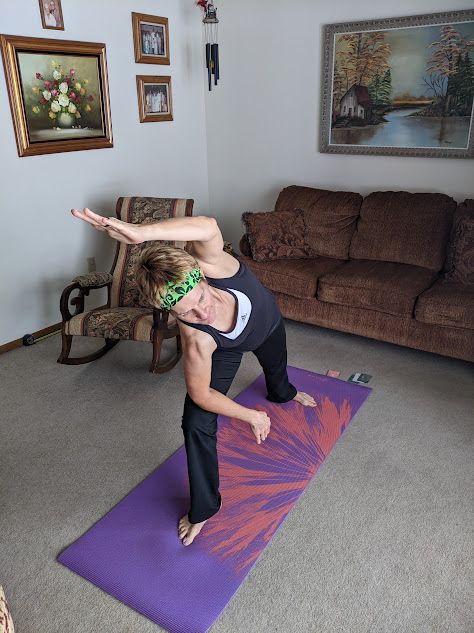
Sometimes we need help getting to a place of acceptance and/or figuring out what’s next once we get there. That looks different for different people and for each of us at different times in our lives. It may involve talking to trusted friends or family members or to a therapist. It may involve becoming part of a supportive community, like the one I found in Hopestream. Physical exercise and mindful movement, like cycling, walking, running, swimming or yoga can help us work through hard feelings and find our physical, mental and emotional strength. When we’re ready to turn our pain into purpose, resilience coaching can help us focus our energy in positive ways.
As Kris Carr said, “Rather than assigning blame and dwelling on the past, remember that it’s more productive to focus on taking care of our mental and physical health in the present moment.”
Acceptance makes that possible.
I invite you to ask yourself this week if there is an aspect of your life that you could face with acceptance in order to take better care of your well-being and move forward with greater power.
Thanks for reading!
Sheri Barnes | NOV 24, 2024
Share this blog post