
Recognizing & Relieving Burnout
Sheri Barnes | NOV 3, 2024
Often, we think of burnout in relationship to our paid work. While it can certainly arise in connection to work, burnout can result from pressure in other areas of life. For many reading this post, it may start with compassion fatigue.
Compassion fatigue happens when we become mentally and emotionally exhausted by frequent exposure to others’ pain and struggle. For those of us who have been on a journey of caring for a child or other loved one who struggles with mental health or substance use disorder, the demands can feel relentless. No matter how much we love the struggling individual, we can become worn out. Responding with empathy gets tougher when our loved one makes choice after choice that only seem to dig their hole deeper. Eventually, this compassion fatigue compounds into trauma—both vicarious, through hearing and witnessing our kids’ “war stories,” and firsthand, through the crazy life that has been thrust upon us. When we are caught up in the day-to-day demands of caring for someone who is struggling, it can be exceedingly difficult to recognize, acknowledge and address our own fatigue and trauma. For a long time, I put my life and my needs on hold. I was too busy and too worn out to tend to nurture my own mental and emotional well-being. Unfortunately, that often leads to burnout, when we feel physically and mentally exhausted as a result of prolonged stress and overwhelm.
When we experience burnout, in addition to exhaustion, we may develop a cynical perspective on life, and we often feel that our capabilities are inadequate to handle to the demands that are placed on us. We can feel hopeless; the light at the end of the tunnel is impossible to see. Just recalling those days drains energy from my mind and body.
There are several types of burnout, depending on what sources you read. I think the types most applicable to the PenPedalPose community are likely:
- Overload burnout: We try so hard and so frantically to help our struggling child that we put our own well-being aside for another day . . . or year.
- Neglect burnout: This seems like a misnomer to me, but it describes the type of burnout that results from feeling helpless and incompetent. Parenthood can lead to feeling this way under many circumstances, but none more than when our child chronically struggles. Far from “neglecting” our responsibilities, we desperately work to care for those who need us, only to feel repeatedly like failures or imposters.
- Habitual burnout: When the demands just keep coming, and we don’t find ways to alleviate our own suffering and tend to our health and well-being, our exhaustion becomes chronic and pervasive. This leads to sadness and potentially depression, despair and maybe even thoughts of suicide. It is crucial to seek help from a mental health professional if we are feeling this way.
So, what can we do if we recognize that we are feeling compassion fatigue, suffering from the effects of vicarious or firsthand trauma or experiencing burnout?
As with solving any problem, recognizing it is the critical first step. In fact, Recognize is the first step in the self-compassion technique called RAIN. Meditation teacher Michele McDonald developed the technique, and Tara Brach has helped to raise awareness about its effectiveness as a tool for taking care of ourselves. See the link above for more detail, but these steps can get you started:
- Recognize: Pause to check in with yourself and identify how you are feeling. It may be helpful to schedule a specific time each day to do this or to do it spontaneously throughout the day. Either or both can be effective.
- Allow: Give yourself a moment to just let the feeling be, without fighting it or pushing it away.
- Investigate: Ask yourself some questions without judgment, just in the spirit of understanding. What is causing me to feel this way? What physical sensations am I experiencing in my body?
- Nurture, Note or Non-Identify: The “N” in RAIN can stand for different things, depending on your source. There is value to all of them, and I use different ones at different times. Or, sometimes, I stack them—like RAINNN. Here’s how this might look:
o Note: Based on my investigation (Step 3), what is the feeling in my body? Note “tightness in my abdomen,” “headache,” “butterflies in my stomach,” etc. Just acknowledge and let it be.
o Non-Identify: I am more than my feelings. Just because I feel hopeless, sad or scared, it doesn’t mean that I am a lost cause or a sad person or a coward.
o Nurture: How can I best care for myself in this moment? Then, of course, it’s important to follow through and take care of ourselves as much as possible in the moment.
I named my coaching and yoga practice after some of the self-care tools that have helped me most:
- Pen stands for story. Whether in my journal, sharing with my moms’ group or blogging, story helps me to make sense of this wild journey and to choose my own theme and direction in my life, moving forward. Recognizing that I get to determine the meaning of what has happened in my life is very empowering. I write my own next chapter.
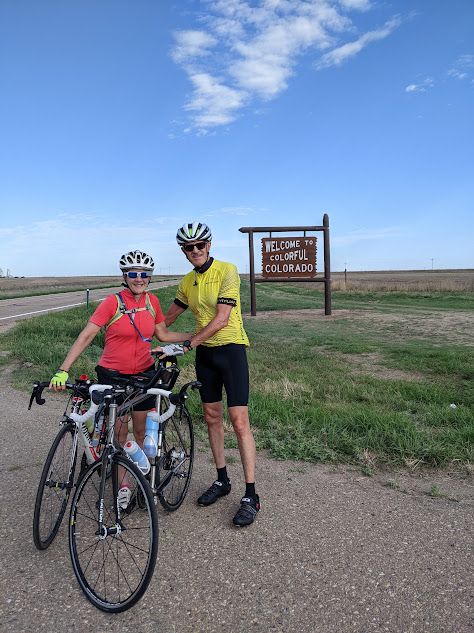
- Pedal stands for purposeful movement. Cycling is a major passion of mine, hence “pedal,” but walking, running, swimming, dancing, strength training and more can provide a meaningful outlet for letting your mind wander in a constructive way, while releasing feel-good endorphins in your body.
- Pose represents the principles and practice of yoga. There is so much that we can learn through yoga philosophy and through the experience of asana, the physical practice of yoga. Bedtime yoga was life changing for me in the heat of our family’s struggle, and it remains a nightly staple that helps me process and release the day’s events and settle more easily into sleep.
By recognizing the feelings that contribute to and result from burnout, we gain the power to rise from it. We can even use it as the catalyst for a positive change. That might look like leaving a situation that is constantly overwhelming us and making us miserable. That isn’t always possible, though. Sometimes, we simply need to take care of ourselves while we persevere through the struggle and determine to grow through it and create good from it. Remembering that we are responsible for writing our next chapter is one way to keep going when life is hard.
I founded PenPedalPose out of the promise I made to myself to do just that, and I am committed to helping you do the same, whatever your version of rising from the struggle looks like. Explore my Resilience Coaching and Yoga offerings here.
Burnout feels awful, and it seriously hinders our ability to be effective and make a positive difference in the world. Let’s commit to loving ourselves enough to rise out of it with meaning and purpose. There’s a lot of good to do in the world!
Sheri Barnes | NOV 3, 2024
Share this blog post